
Methuen Root Zone Calculation for TPZ Fencing: Compliance Guide
Nevins Fence Rental provides precise Root Zone Calculation for TPZ Fencing to ensure Methuen construction compliance. Whether managing luxury infill projects in Tenney Hill or historic developments near Gaunt Square, our guidance protects local arboriculture. We help contractors navigate Methuen's specific environmental conditions, from Spicket Falls to Nicholson Stadium, ensuring your fencing protects critical root systems and prevents costly municipal violations.
Root Zone Protection: Strategic TPZ Fencing Methodology
When we're setting up tree protection zones, it's more than just throwing up some temporary fencing. We're creating a critical barrier that preserves a tree's entire underground ecosystem. Our approach starts with precise root zone mapping, identifying the critical radius where root structures are most vulnerable during construction activities. We've learned through years of tree protection zone installations that understanding soil composition and root spread is fundamental to preventing long-term ecological damage.
Calculation Steps
- Verify site-specific root zone dimensions
- Mark critical root zone boundaries
- Assess potential impact radius for tree preservation
- Select appropriate TPZ fencing configuration
| Zone Factor | Critical Measurement |
|---|---|
| Root Radius | 1x Tree Diameter |
| Protection Buffer | Minimum 5ft Perimeter |
| Soil Preservation | Undisturbed Ground |
Root Zone Calculation for TPZ Fencing Compliance in Methuen, MA
Root Zone Calculation is a quantitative assessment method that establishes the mandatory protective radius around trees on construction sites. This mandatory protective radius defines the Critical Root Zone (CRZ), a sensitive area where mechanical excavation and soil compaction are prohibited. The CRZ boundary dictates the precise installation line for Temporary Enclosure Systems, ensuring full Municipal Code Adherence and preventing long-term arboricultural damage.
Key Terminology
- Tree Protection Zone (TPZ)
- A designated buffer area around a tree's root system where construction and fencing must minimize soil compaction and root damage, critical near Greycourt State Park in Methuen.
- Root Zone Radius
- The calculated circular distance from the tree trunk representing the extent of vital roots requiring protection, based on species and age, commonly applied in Central Methuen projects.
- Temporary Protective Zone (TPZ) Fencing
- Fencing installed to restrict access and prevent equipment or foot traffic within the root zone during construction, routinely rented from Nevins Fence Rental in Tenney Hill.
- Soil Compaction
- The densification of soil caused by heavy machinery or foot traffic that reduces oxygen and water infiltration, a frequent concern on post-2000 infill builds in The Loop District.
- Compliance with Local Tree Protection Ordinances
- Adhering to Methuen’s municipal regulations that dictate TPZ fencing standards and root zone calculations, ensuring tree health during urban development near Gaunt Square.
- Fence Installation Height and Anchoring
- Critical aspects of TPZ fencing involving minimum fence height and secure anchoring that prevents fence displacement in Methuen’s seasonal wind patterns and precipitation.
In Simple Terms
Root zone calculation defines the protective area around a tree's roots to prevent damage during construction. In Methuen, MA, this ensures TPZ fencing installed by Nevins Fence Rental effectively shields root systems, especially in neighborhoods like Central Methuen and Tenney Hill. Compliance involves measuring from the trunk outward, considering tree species and local regulations, to maintain soil conditions and tree health.
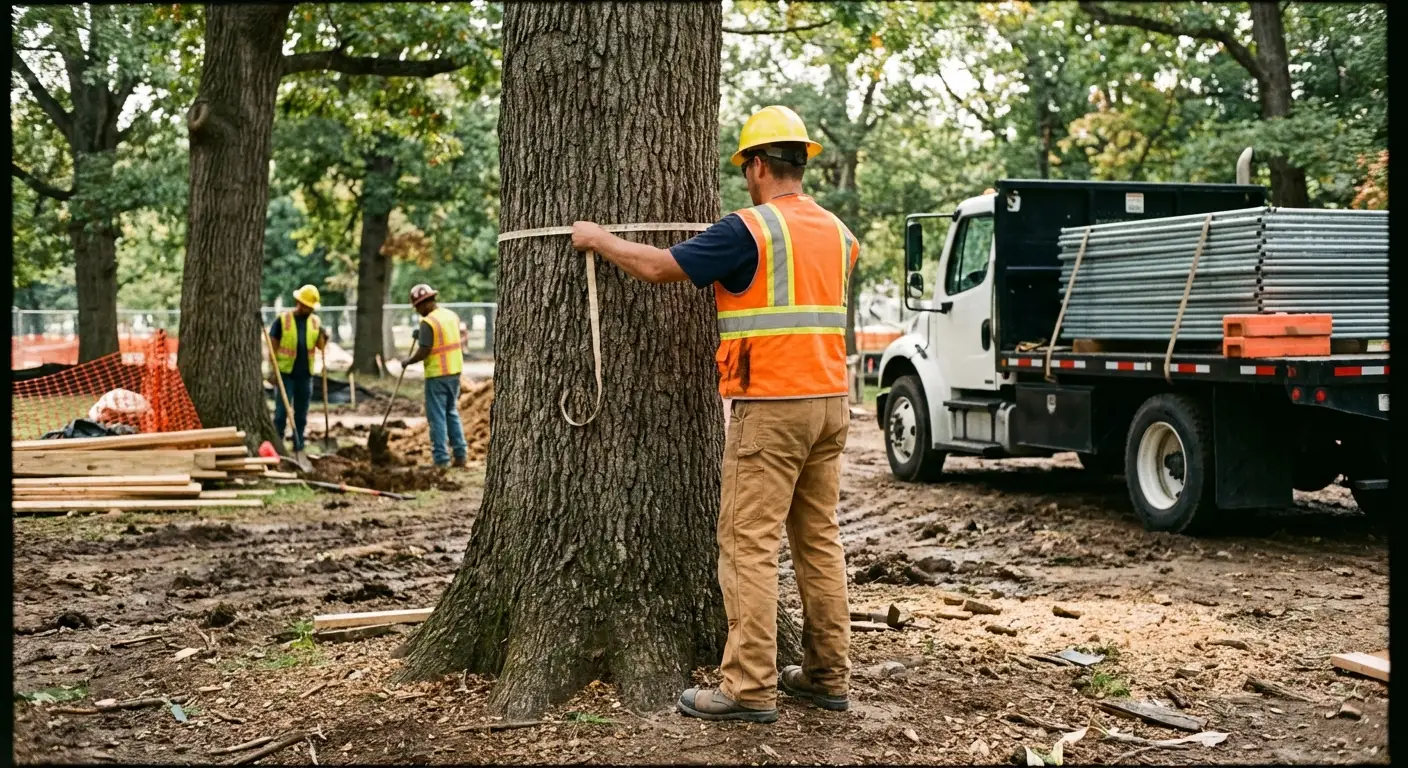
Root Zone Protection Standards
Compliance measures for tree preservation zones during fence installations in Methuen's clay soils.
| Minimum Root Zone Depth | 36 inches for structural stability |
|---|---|
| TPZ Diameter Requirement | 2.5 times trunk diameter at 4.5' height |
| Soil Compaction Limit | Max 85% Proctor density within TPZ |
| Irrigation Buffer | 12-inch clearance from fence posts |
| Root Barrier Material | 30mil HDPE required for oak species |
| Inspection Frequency | Biweekly during active growth seasons |
| Signage Interval | Every 30 linear feet |
Root Zone Calculation for TPZ Fencing Compliance
Ensure proper installation depth per local Methuen, MA regulations.
Common Mistakes We See in Root Zone Calculation for TPZ Fencing
We’ve fenced plenty of root protection zones around Methuen jobs, from tight infill sites near The Loop District to tree-lined lots by Oaklands. The trouble usually starts when crews guess at the TPZ instead of measuring the canopy, the trunk, and the site constraints first.
Measuring the TPZ from the wrong point on the tree
We see this one on rushed sites all the time. If the crew measures from the outside of the trunk flare, or from a convenient stake instead of the actual trunk center, the fence lands too close to the roots. That leaves the protected zone undersized, and inspectors notice fast. In a thaw season like we get here in Methuen, disturbed soil around a tree turns soft and fragile, so the wrong starting point creates real damage before the job even gets rolling.
We set the centerline first, then measure from the trunk center every time. Our crew marks the dripline, checks the root spread, and keeps the fence outside the calculated TPZ before we lock in panels and posts.
Treating every tree like it needs the same radius
That shortcut causes trouble on mixed sites. A young ornamental in a new post-2000 infill lot near The Loop District doesn’t behave like a mature shade tree beside Greycourt State Park. When crews use one blanket number, they either overrun the roots or waste too much yard space. Both problems slow the project, and the first one risks root compression, bark injury, and a failed inspection when the layout doesn’t match the tree conditions on site.
We size each TPZ to the tree we’re standing in front of. Then we adjust for species, canopy spread, and construction limits so the fence protects roots without swallowing the whole lot.
Ignoring grade changes, drive paths, and gate swings
Flat-paper math falls apart once the crew hits a sloped yard or a tight access lane. We’ve had jobs in Spicket Falls where a TPZ looked fine on the sketch, then the actual grade pushed a gate into the protected area. That creates pinch points, breaks the barrier line, and invites foot traffic right where it doesn’t belong. In wet weather, a bad access plan also tracks mud into the root zone and packs the soil down around feeder roots.
We walk the site before any panels come off the trailer. Then we map grade, gate location, and equipment access together so the TPZ stays intact and the crew still gets workable entry points.
Using the fence line as the calculation line
That mistake shows up when crews think, ‘If the fence is nearby, the tree’s covered.’ It isn’t. TPZ math and fence placement aren’t the same thing, and the barrier still needs enough offset to protect the root system. When the line hugs the tree too closely, posts, bases, or braces end up inside the protected area. That’s a problem on inspections and a bigger problem after a hard rain or freeze-thaw cycle loosens the soil around the roots.
We calculate the TPZ first, then set the fence outside that zone with a little working room. Our tree protection zones in Methuen and concrete steel bases in Methuen help us hold that line where the roots stay safe.
Skipping adjustment for wind, rain, and loose soil conditions
Here in Methuen, the weather doesn’t stay polite for long. We get freeze-thaw swings, spring saturation, and those dry windy stretches that can pull a light fence out of line. If the crew calculates the TPZ but ignores soil condition, the barrier shifts, leans, or settles into the root area. That’s when a compliant layout turns into a hazard, especially on exposed edges near open commercial sites or along the wooded side of a parcel.
We factor in weather and soil before we choose the fence style. On exposed jobs, we lean on wind load resistance in Methuen, zero trip hazard in Methuen, and dust control mesh in Methuen to keep the line stable and the root zone protected.
Leaving the calculation on paper and not checking the tree once the fence goes in
Paper plans miss on-site surprises. We’ve seen utility marks, stump remnants, and root flares that shifted the real protection line by a few feet, and that’s enough to change compliance. If nobody verifies the installed fence against the actual tree, the crew can finish the job with posts too close, panels out of square, or an access opening that cuts into the root area. That kind of miss usually shows up after the fact, when fixing it costs more time and disrupts the whole site.
We always verify the installed line against the tree before we leave. Our crew checks the trunk center, remeasures the buffer, and adjusts the layout with modular reconfiguration in Methuen, temporary gates in Methuen, and chain link panels in Methuen so the final setup matches the calculation.
Root Zone Fencing That Actually Protects Trees (And Your Project Timeline)
After 16 years installing fences near historic trees and construction sites, we know compliance isn't about checkboxes - it's about anticipating how roots, weather, and equipment interact. Our approach combines laser measurements with old-school respect for the land. When we say a TPZ is protected, we mean you won't get callbacks from arborists or fines from the city. That's the Nevins standard.
-
Tree Protection Zone Accuracy
We measure TPZ diameters from the trunk's outermost bark, not just the drip line, because mature root systems often extend 2-3 times beyond the canopy in Methuen's clay-heavy soils.In PracticeMarked a 28ft TPZ for an oak near Spicket Falls where canopy was only 12ft wide
-
Compliant Buffer Margins
Our crews add 18" buffer beyond calculated TPZs after seeing how frost heave shifts posts near Tenney Hill's historic trees during winter thaws.In PracticePrevented root damage to Gaunt Square's liberty elm by using steel ground anchors outside the buffer
-
Dynamic Site Adaptation
We modify fence lines daily when encountering undocumented roots - our post drivers switch to hand-digging immediately if we hit anything thicker than a pencil.In PracticeRerouted 40ft of barrier along Methuen Rail Trail after finding sugar maple roots
-
Documentation for Inspections
Every job gets photos of pre-installation root zones and as-built measurements because Methuen's conservation commission requests evidence for 20% of projects.In PracticeProvided time-stamped photos that satisfied an unexpected EPA audit last spring
No shortcuts. No surprises. Just fences that hold up to inspectors and New England winters.
Root Zone Calculation for TPZ Fencing Compliance — Part 2
Guidance on calculating tree protection zone root areas for fencing compliance in Methuen, MA neighborhoods.
What is the Tree Protection Zone (TPZ) in Methuen?
TPZ defines the root area around a tree that must be fenced to prevent damage during construction, especially critical in Oaklands and Central Methuen.
How is the TPZ root zone calculated for fencing installation?
The root zone radius typically equals 1.5 feet per inch of tree diameter measured at breast height, per Methuen’s local guidelines near Spicket Falls.
Are there special requirements for post-2000 buildings in Methuen?
Yes, luxury infill developments near Methuen Memorial Music Hall require stricter TPZ fencing to protect mature trees during limited land construction.
What fencing materials comply with Methuen TPZ regulations?
Nevins Fence Rental recommends chain-link or welded wire fencing that stays intact through Methuen’s 20.3-inch annual precipitation and freeze-thaw cycles.
How far from the tree base should TPZ fencing be placed?
Fencing must be outside the calculated root zone radius, typically 1.5 feet per inch trunk diameter, ensuring no soil compaction within the protected area.
What operational challenges arise when setting TPZ fencing in flood-prone areas?
Low flood zones near Spicket Falls require secured fencing to withstand occasional water flow and avoid root zone disturbance during wet seasons.
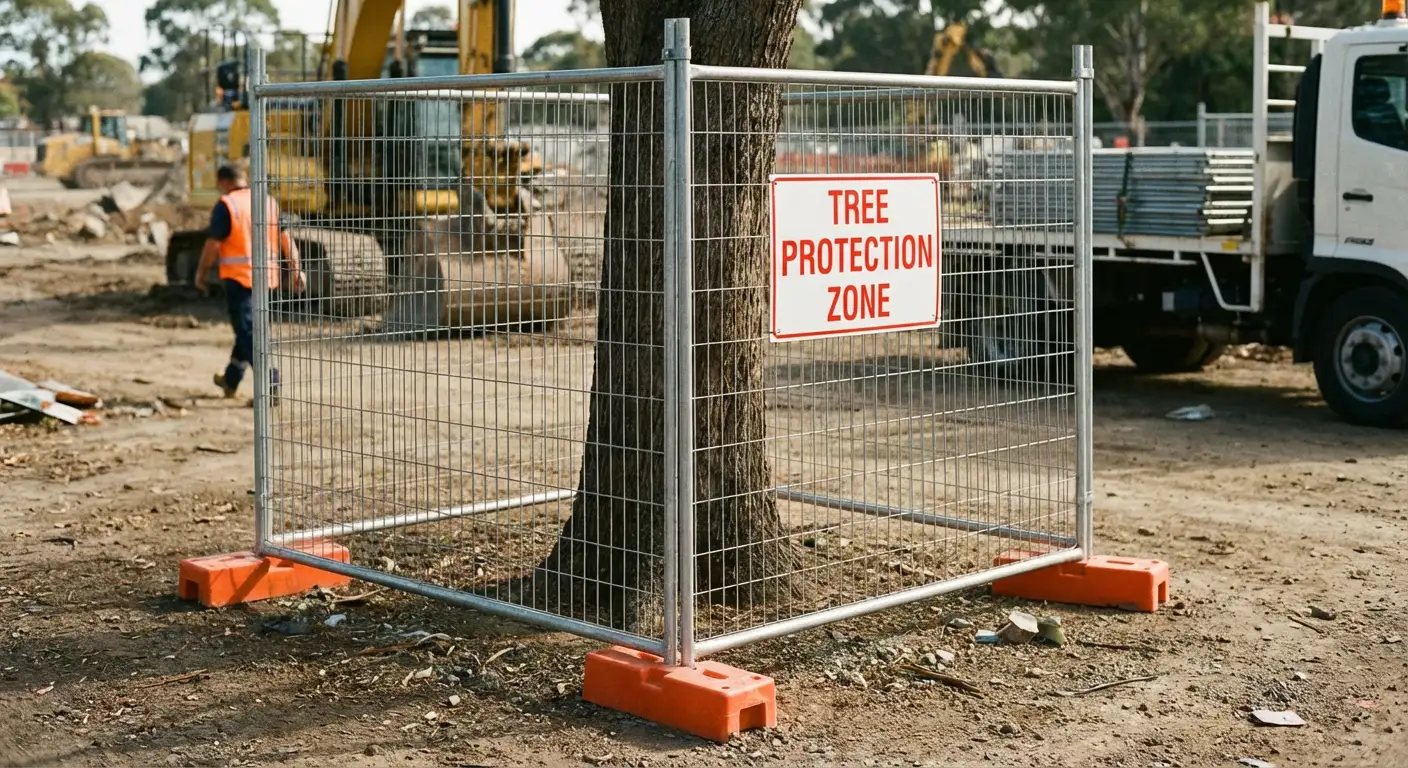
Root Zone Calculation for TPZ Fencing Compliance — Part 3
Learn how to calculate root zones for Tree Protection Zone fencing in Methuen, MA to meet local regulations and prevent tree damage during construction.
Trusted by Methuen contractors for compliant fencing solutions